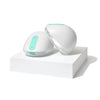




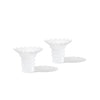


Willow Go’s flange is designed for optimal comfort and milk output.
tl;dr The flange is one of the most consequential parts of any breast pump, and Willow Go's is designed differently from most. A longer flange tunnel, a smooth and continuous interior surface, a clinically tested 105° cone angle, and curved edges that wrap back around the pump all combine to create a more comfortable, effective pumping experience. This article, written by a board-certified paediatrician and lactation consultant, explains exactly what sets it apart.
Willow Go is engineered to fit great, feel good, and make more milk––and a key part of that design is the flange. Dr. Laurie Jones, board certified pediatrician and lactation consultant, explains. Read on for more, or watch the video.
What is a flange? Why is fit so important?
A flange is a cone-shaped funnel, typically ending in a tunnel, that seals over your nipple and breast and creates a vacuum to transmit milk––and it’s one of the most important pieces to pumping success. Flanges come in different sizes because nipples vary in size from person to person and even from breast to breast.
The reason we stress proper flange fit is because an improperly fitted flange will affect output and can reduce stimulation, minimizing the hormonal rush of oxytocin that triggers letdown and milk production, and can cause injury. In other words, your supply could drop.
How Willow Go’s flange design is innovated for comfort and milk output
A good, close flange fit is important for any wearable, but Willow Go’s flange is uniquely designed to make pumping more comfortable and effective. Here’s how.
A smoother, longer flange tunnel
Much of Willow Go’s comfort can be attributed to the depth of its flange tunnel, which is longer than most other wearables. When babies nurse, they pull the nipple all the way back to their soft palate near the throat––it stretches a lot! This very long and smooth flange tunnel allows for nipple movement that more closely mimics how a baby breastfeeds. This is why so many moms say that pumping with Willow feels similar to the way their baby breastfeeds.
A longer flange tunnel accommodates more of the nipple (even elastic ones!) to avoid abrasion. This means the nipple is less likely to crash into the end of the flange, which is painful and inhibits milk output, and can be common in other wearable pumps.
Willow Go’s flange is also unique because of its smooth surface. Whereas many flange tunnels are “interrupted” by a diaphragm or duckbill, Willow Go’s flange tunnel is totally continuous and smooth, assuring no nipple abrasion by more closely mimicking the smoothness of baby’s mouth. Combined, this design allows for movement that is critical for nipple comfort, releasing oxytocin and milk letdown.
An 105° flange cone
The Willow Go has a wide flange cone of 105 degrees, while many wearable pumps have a less-optimal 90-degree flange cone angle. This is important because a 105-degree angle is clinically proven to express a higher volume of milk in less time, with higher peak flow rates, and shorter time to first milk ejection. This means more milk, more quickly!
A curved flange edge for comfort
When comparing Willow Go to other wearables, you’ll also notice a difference in the shape of the flange itself: Specifically, the curved edges that wrap back around the pump. This design is more optimized for comfort than a flange with a flat, cone-shaped edge, which runs the risk of pinching and pulling breast tissue, as well as creating more friction which can lead to skin thickening. The curved flange edge means more pumping comfort, and comfort is key to our body’s release of oxytocin and your pump’s ability to empty you.
Uniquely designed flange inserts for comfort & optimal fit
The flanges that came with your pump kit might not fit––and that’s not uncommon. If you need a smaller size, Willow offers a range of flange inserts. Willow’s inserts have also been thoughtfully designed for maximum comfort. They differ from other inserts or nipple cushions as they’ve been made with a matte material that’s smooth against skin, just like baby, and not sticky like some inserts. They also have tapered edges so your nipple can glide along the flange tunnel, instead of abruptly ending and creating a hard edge that can cause nipple abrasion.
It’s not just a wearable, it’s a Willow
You have so many choices when it comes to pumping. What sets Willow apart is more than its mom-first mentality. It’s the pairing of innovation with real-mom insight. Now that you know the importance of flange fit, we hope you’ll easily find which pump is right for you.
FAQs
What makes a breast pump flange comfortable and effective?
A good flange needs to fit your nipple correctly, allow for natural movement, and protect breast tissue from friction and compression. A longer flange tunnel gives the nipple more room to move, similar to how a baby draws the nipple back during nursing. A smooth, continuous interior surface prevents abrasion. A wider cone angle (such as 105°) improves breast coverage and suction alignment. And curved edges rather than flat ones protect skin from being pinched. Together, these features support both comfort and milk output.
How do I know if my breast pump flange fits properly?
A well-fitting flange feels snug but not painful. Your nipple should move freely in the tunnel without rubbing against the sides, and your areola should not be pulled excessively into the flange. If you feel pinching, notice your nipple turning white or misshapen after pumping, or experience a drop in output without explanation, your flange size may be off. It's worth measuring your nipple diameter and reassessing fit whenever you notice changes in comfort or supply, nipple sizes can change throughout your pumping journey.
What is a 105-degree flange cone angle and why does it matter?
The flange cone angle refers to how wide the funnel-shaped part of the flange opens at the base where it meets your breast. A wider angle, such as 105° compared to the more common 90°, means the flange covers more surface area of the breast. This leads to better alignment, more effective suction distribution, and greater stimulation of the milk ducts. Clinically, a 105° angle has been shown to express a higher volume of milk in less time, with faster first letdown and higher peak flow rates.
Tags Used