





If the standard flange sizing advice hasn't worked for you: 1. You’re not alone and 2. The problem likely isn't your technique or your body. It's that the most common sizing rule in breastfeeding ("measure your nipple base, add 2–3mm") doesn’t account for nipple tissue that stretches deep into a flange tunnel under suction. I.e. elastic nipples.
The other reason why you might be struggling to find the right fit is because many wearable breast pumps weren’t designed for female anatomy. As our CEO, Sarah O’Leary, wrote in this Fast Company op-ed article, pump brands frequently optimize for investor-friendly specs like slim profiles rather than female anatomy -- a tradeoff that shows up directly in flange tunnel length numbers.
One of the most important measurements that determines whether you pump comfortably, especially if you have elastic nipples, is the tunnel length. If tunnel length is too short, your nipple is likely to crash into the back of the pump and cause pain while pumping, which can lead to many issues including lessened milk output.
What Are Elastic Nipples and Why Are They More Sensitive?
Elastic nipples stretch significantly further into the flange tunnel during suction than average nipple tissue. The elasticity itself is common and completely normal, but the challenge is that this extra stretch can make pumping painful and less efficient if the flange tunnel doesn't have enough depth to accommodate it.
Why Standard Flange Sizing Advice Fails You
The standard approach to flange sizing focuses almost entirely on diameter. You’re likely familiar with instructions that say something along the lines of “measure your nipple base, add 2–3mm for clearance, and pick a flange that size.” For average nipple elasticity, that can work reasonably well.
This measurement may not work as well for elastic nipples, as they extend deep into the tunnel even when common sizing guidance is followed, which means the nipple can travel far enough to hit the end of the tunnel or the milk opening. When that happens, you get pain, abrasion, and ultimately reduced milk output, none of which are solved by adjusting diameter alone.
Researchers in a pilot study on flange fitting found that flange fitting may require trying multiple sizes, since a single measurement formula can’t always predict the best fit across every different anatomy. Elastic nipples are a perfect example of why.
Why a Short Tunnel Hurts and What It Does to Your Milk Supply
When an elastic nipple repeatedly collides with the end of the tunnel or the milk opening, the result is damage to the nipple tissue. A BMJ review on breast and nipple pain during lactation found that breast pumps can cause nipple damage when flange fit is wrong or pressure is too high and prolonged.
That pain isn't just a comfort problem. Pain directly affects milk production through a hormonal chain. Research published found that maternal breast pain significantly reduces milk supply by disrupting hormonal processes, including lower oxytocin levels critical for milk ejection.
Oxytocin triggers the let-down reflex that moves milk from the breast. Studies on the let-down reflex and mothers' experiences with breast pumps confirm that pain and discomfort reduce the oxytocin response, which inhibits the flow of milk. A flange tunnel that's too short for elastic nipples creates a cycle: pain suppresses oxytocin, reduced oxytocin suppresses let-down, and output drops. This is why we’re constantly shouting from the rooftop: Comfort = milk output!
Wearable Pump Flange Tunnel Length Comparison
Pump brands don’t publish official tunnel lengths, so we measured it ourselves to help you better understand what to look for*.
|
Pump |
Length Until Opening (mm) |
|
Willow Go |
28 |
|
Eufy S1 Pro |
~17 |
|
Momcozy Air 1 |
~16 |
|
Spectra Wearable |
~22 |
|
Momcozy Wellness 1 |
~14 |
*The measurements were taken internally and should be considered approximates since manufacturer specs of these dimensions weren’t publicly available at the time of testing.
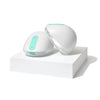
Willow Go provides 28mm of length until opening, the longest of any wearable pump we measured.
Most of these lengths are too short for any size nipple, but for an elastic nipple that stretches under suction, those extra millimeters are the difference between clearing the opening and hitting the end of the tunnel every cycle. In other words, it can be the difference between good and great milk output.
What to Look for in a Flange
In addition to flange tunnel length, the other factor to consider is the surface (hint: you’re looking for a smooth, uninterrupted inner surface).
Some flanges have ridges, seams, or multi-piece construction inside the tunnel. For elastic nipples that travel deep into the tunnel and contact the walls with each suction cycle, any surface interruption can cause abrasion and tissue damage with repeated sessions. Willow Go uses a single smooth inner surface with no seams or joins along the tunnel wall, directly addressing the BMJ's finding that flange design contributes to nipple damage.
How to Find Your Starting Size
Sizing for elastic nipples follows a different protocol than the standard approach. We previously mentioned a study on flange fitting which found that standard-fit flanges produced significantly less milk output and less comfort compared to smaller-size fittings, which supports starting smaller rather than larger.
Step 1: Measure your nipple tip diameter (not the base). Elastic nipples change shape under suction, so the base measurement that standard guides rely on will overestimate the size you need.
Step 2: Start at your measured size or 1mm smaller. The standard "+2–3mm" buffer creates extra space that allows elastic tissue to stretch further, often making the problem worse.
Step 3: Try the size during an actual pumping session. Static measurement alone can't predict how your tissue reacts under suction. Watch for comfort, output volume, and whether you feel the nipple contacting the end of the tunnel.
Step 4: Adjust based on comfort and output, not appearance alone. A nipple that looks like it "fits" in the tunnel may still be stretching too far if the tunnel is short. The Willow flange measurement guide walks through this process with visual references.
Using Inserts to Fine-Tune Fit
Once you've identified the right tunnel depth, you may still need to adjust diameter. This is where inserts become useful. Sizing inserts reduce the diameter of the flange tunnel without changing the tunnel depth or tunnel clearance.
For elastic nipples, this distinction is critical. Switching to a smaller flange size on most pumps changes both diameter and tunnel geometry. An insert lets you narrow the tunnel opening to reduce tissue pull-in while preserving the full depth your nipple needs.
The Willow Breast Pump Sizing Kit ($24.99) includes multiple insert sizes so you can try different diameters within any pump flange. If the first session at your measured size feels close but not quite right, moving down 1mm with an insert is a lower-risk adjustment than switching flange sizes entirely.
Signs Your Current Flange Isn't Working
If you're experiencing any of these during or after pumping, your flange fit likely needs adjustment:
-
Nipple hits end of the tunnel. You can feel the nipple contacting a hard stop at the bottom of the flange with each suction cycle. This is the most direct sign that the tunnel depth is too short for your anatomy.
-
Pain or abrasion after sessions. Redness, rawness, or soreness on the nipple tip or shaft that appears after pumping and wasn't present before the session.
-
Low output despite correct suction. You've verified suction strength and pump function, but volume remains lower than you expect. Pain-driven oxytocin suppression is a common hidden cause.
-
White or blanched nipple tip post-pump. Blanching indicates compression or restricted blood flow, often caused by the nipple being forced against the tunnel wall or opening.
If you're experiencing multiple symptoms from this list, the issue is more likely structural (tunnel depth and flange geometry) than a simple diameter mismatch. You can read more about how elastic nipples interact with flange design on our elastic nipples overview page.
Frequently Asked Questions
What flange size should I use for elastic nipples?
Measure your nipple tip diameter (not the base) and start at that size or 1mm smaller. The standard "+2–3mm" rule tends to create excess space that allows elastic tissue to stretch further, often making the problem worse. Try the size during a session and adjust based on comfort and output.
Does tunnel length affect milk output?
Yes, indirectly. When a nipple repeatedly contacts the end of a short tunnel, it causes pain and tissue trauma. Research published in Pain Medicine (Apr 2015) found that breast pain disrupts the hormonal processes behind lactation, including suppressing oxytocin levels critical for milk ejection.
Can inserts help with elastic nipples?
Inserts can help fine-tune diameter fit without changing tunnel depth, which matters for all nipples, especially elastic nipples, because the two variables need to be adjusted independently. Reducing diameter with an insert while keeping the full tunnel depth available is a lower-risk adjustment than switching to a smaller flange size, which changes both dimensions at once.
How do I know if my flange tunnel is too short for my anatomy?
The clearest sign is feeling your nipple contact a hard stop at the end of the tunnel during suction. Other indicators include pain or abrasion on the nipple tip or shaft after sessions, white or blanched nipple tip post-pump, and lower output than expected despite correct suction settings.
Is Willow Go good for elastic nipples?
Willow Go has the longest length until opening of any wearable pump measured in our internal testing, 28mm. That “length to opening” in the tunnel is a key measurement for elastic nipples in particular, and Willow Go’s is significantly longer than most wearable alternatives. Additionally, the Breast Pump Sizing Kit allows diameter fine-tuning within that tunnel depth using inserts, and it’s universal to any breast pump.
Tags Used