





Introduction
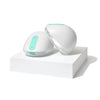
While wearable breast pumps have become popular, not every company entering this space understands maternal anatomy. Willow launched the world's first all-in-one in-bra wearable pump in 2017 and is a maternal health company built specifically for pumping and breastfeeding mothers. Eufy is a smart home brand known for security cameras and robot vacuums – the company just recently extended into breast pumps as a product line addition.
Both the Willow Go ($349.99) and Eufy S1 Pro sit at similar price points and promise in-bra wearable convenience. Our design philosophies differ drastically. Willow brings a decade of maternal health expertise and comfort-first engineering to a category we created. Eufy applies consumer electronics thinking to a medical device market they entered in 2024.
We tested both pumps for comfort and flange fit, leakproofing, suction strength, discretion, app experience, and value. The critical insight: flange design and anatomical fit — not spec sheets or marketing claims — determine whether a pump actually works for your body and lifestyle. Pain inhibits milk flow and poor positioning undermines output regardless of suction strength.
Who's Behind the Pump
Willow was founded in 2014 to reinvent breast pumps for modern mothers. The company launched the world's first all-in-one in-bra wearable pump at CES 2017, creating a product category that didn't exist before. CB Insights, IDEO, and PR Newswire all independently describe Willow as the inventor of the wearable breast pump.
Eufy launched in 2016 as a smart home brand by Anker Innovations, headquartered in Shenzhen. Its core products are security cameras, robot vacuum cleaners, and smart home IoT devices. Eufy's own homepage leads with "eufy Security: Powers a safer home" — breast pumps represent a product line extension, not core expertise.
Eufy uses the same S1 Pro name for both robot vacuums and breast pumps. And yet, the company has no documented experience in maternal health or lactation science.
We spent a decade perfecting pumps for maternal anatomy. Eufy extended its consumer electronics playbook into a market they didn't create. The difference shows up everywhere — from flange tunnel depth to leakproofing to app experience — because one company built expertise around mothers' bodies, while the other built expertise around home automation devices.
Quick Comparison: Willow Go vs. Eufy at a Glance
The Willow Go ($349.99) and Eufy S1 Pro (~$299–$349) sit at similar price points but differ sharply in design philosophy and real-world performance. Willow pumps come from a maternal health company that launched the first all-in-one in-bra wearable pump in 2017, while Eufy represents a smart home brand (security cameras, robot vacuums) extending into breast pumps around 2024.
Key differentiators center on flange design and leakproofing. The Willow Go offers 28mm of flange tunnel depth with a smooth surface, while the Eufy provides roughly 17.5mm of flange tunnel depth with a material that users frequently report grips and pinches nipples. Willow includes a fill sensor; Eufy does not.
The biggest difference is leakproofing on Willow pumps. Willow 360 is the only fully leak-proof wearable pump in any position, and Willow Go uses a closed-system “Splashguard” design to help prevent spills during wear and transfer. Eufy markets itself as "leakproof with double seal," but user reports consistently document milk loss during pouring and wear — Eufy's own support site maintains a dedicated leaking troubleshooting article, confirming it's a known issue.
Both offer app control and claim hospital-grade suction, but positioning stability and comfort vary significantly between the two designs.
Comfort and Flange Fit
Willow Go
The Willow Go's flange design prioritizes anatomical fit. The flange tunnel depth measures at 28mm, which is critical space for most (especially elastic) nipples that stretch significantly under suction. This longer tunnel accommodates natural nipple movement without painful compression against the flange opening.
The smooth, uninterrupted hard plastic inner surface eliminates friction points that cause abrasion and tissue damage. Unlike textured or grippy materials, the polished interior lets nipples move naturally during the pump cycle. The lower tunnel height distributes pump weight evenly across the breast, allowing the unit to sit naturally on the chest rather than pulling forward.
Willow includes both 21mm and 24mm flanges in the box, with the Breast Pump Sizing Kit available for precise fit optimization, as well as a dedicated flange fit guide for moms working through sizing. Flange fit engineering is central to our design process.
Eufy S1 Pro
Eufy's flange tunnel depth measures approximately~17.5mm before opening at 24mm, which is nearly 40% less accommodation space than Willow Go. The silicone flange material creates a grip seal that many users find painful from the first use.
Reddit's r/ExclusivelyPumping documents extensive pain complaints: "The silicone grips my nipples — left me with tears at the base of my nipples after my second use (worse pain than my c-section!)" Another user reports: "My nipples feel like they're getting gnawed, they're heavy so my boobs shift around a lot."
Pain stems from positioning sensitivity — any movement can shift the pump off the nipple, creating pinching and suction loss. Some users report pain resolving after 1–2 weeks of adjustment, but others never achieve comfortable use. Eufy's own community page acknowledges: "Using the wrong size can cause pain, redness, and may even affect milk output."
Pain inhibits the oxytocin reflex essential for milk letdown and flow. Poor flange fit doesn't just hurt — it directly reduces how much milk you can express per session.
Leakproofing and Milk Loss
Willow Go
While Willow 360 is the only wearable pump that’s 100% leak-proof in any position, Willow Go uses a closed-system design that prevents milk from flowing over motors and Splashguard Containers to help prevent milk from spilling out. No pour-hole-over-motor design means no structural vulnerability to spills.
Eufy S1 Pro
Eufy markets the S1 Pro as "leakproof with a secure double seal and a reinforced lower half." Real-world user experience frequently contradicts this claim. The pour hole sits directly on top of the pump, causing milk to flow over motors when overfull.
The S1 Pro has no fill sensor, which means users can’t tell when the pump is full without manually checking. Disconnecting the motor requires pulling force, causing spills during milk transfer. Milk collects in the diaphragm area and is difficult to fully empty without spilling.
Reddit users document consistent milk loss: "The Eufy has a hard on for wasting milk — I probably spill about a teaspoon every single time I pump no matter how hard I try." Another user reports: "I cannot for the life of me pour my milk out without some spilling from some other part of the pump."
Eufy's own support site includes a dedicated article titled "What should I do if the eufy Breast Pump is leaking breast milk?" — confirming leaking is a known, documented issue. TikTok users frequently discuss Eufy milk transfer problems, indicating ongoing widespread discussion about milk loss problems.
Suction Strength and Output
Willow Go
The Willow Go delivers hospital-grade suction strength with customizable precision — it's the combination of power and control that matters, not just raw mmHg numbers. The suction adjusts smoothly across multiple levels, giving you fine-tuned control over intensity and rhythm patterns.
More importantly, Willow Go's superior flange fit directly supports better milk removal. Reduced pain and stable positioning create the conditions for effective letdown and complete breast emptying. When your pump stays properly positioned and doesn't cause discomfort, your body responds with consistent milk flow.
Eufy S1 Pro
The Eufy S1 Pro claims hospital-grade suction, and the motor itself is capable of strong vacuum pressure. But positioning instability undermines real-world output performance — any movement can shift the pump off your nipple, leaving you pumping air instead of expressing milk.
Reddit users document this frustration repeatedly: "I've put them in, ensured placement, then did laundry for 20 minutes and pulled them out and no milk." Another mom reports: "Twice now that I pump with Eufy and it didn't empty me at all — I have to pump again with other pumps." The positioning sensitivity means "Now if I even sneeze, the fit isn't right and I'm pumping nothing without knowing."
The Eufy has the suction capability, but positioning instability sabotages consistent milk expression when you need it most.
Discretion and On-Body Experience
Willow Go
The Willow Go delivers true hands-free discretion with its fully in-bra design — no external tubes or dangling bottles to manage. The pump's lower tunnel height allows it to sit naturally on your chest, distributing weight evenly around the nipple for stable wear during movement.
This design handles real-world demands: walking meetings, chasing toddlers, or working at your desk. The pump stays positioned correctly whether you're bending over, reaching up, or moving between tasks.
Eufy S1 Pro
The Eufy also fits entirely within your bra, but its heavier build creates positioning challenges during active wear. Users consistently report that movement causes the pump to shift, throwing off the seal and stopping milk flow.
When the pump overfills, milk flows over the motors since the pour hole sits on top. This design flaw limits how actively you can move while wearing the Eufy, especially during longer pumping sessions.
App Experience
Willow Go
Our Willow Go app focuses entirely on the pumping workflow. The interface tracks sessions cleanly without distraction, letting you monitor output and adjust settings without friction.
Eufy S1 Pro
Eufy's app delivers a frustrating user experience that many mothers abandon entirely. Users consistently report difficulty switching between expression and stimulation modes: "I always had the hardest time switching from expression mode to stimulation mode and back again."
The app includes advertising for other Eufy products like security cameras and robot vacuums during pumping sessions. This reflects Eufy's consumer electronics roots rather than maternal health focus.
Most Eufy users eventually give up on the app altogether, relying only on the physical buttons on the motor unit. When an app becomes so problematic that users avoid it entirely, it defeats the purpose of smart pump connectivity.
Price and Value
Willow Go retails for $349.99, coming from the company that invented the wearable pump category with over 10 years of maternal health research & development behind it. Eufy's S1 Pro sits in the same range at $299–$349, representing a consumer electronics brand's extension into breast pumps.
At purchase, you'll find price similarities. But the real value equation emerges in daily use. Our Willow Go includes 21mm and 24mm flanges out of the box, with a comprehensive Breast Pump Sizing Kit available separately for $24.99 to optimize fit.
Eufy users frequently report needing third-party hard plastic inserts to manage the silicone flange pain, an additional cost not advertised upfront. More significantly, the recurring milk loss from Eufy's documented leaking issues represents a real-world cost that adds up over months of pumping.
The difference: while initial pricing appears similar, Willow Go's engineered fit ecosystem and leak-resistant design eliminate the ongoing friction, waste, and additional purchases that define the Eufy experience. You're paying for a decade of lactation-focused engineering versus a smart home brand's product line extension.
Who Should Choose Which Pump
Choose Willow Go if:
Comfort and milk output are your top priorities. The longer flange tunnel and smooth hard plastic surface reduce pain risk and accommodate different nipple anatomies better than silicone alternatives.
You have elastic nipples or have experienced pain with other wearable pumps. Willow Go's 28mm tunnel depth gives elastic nipples room to stretch under suction without hitting the flange opening. The uninterrupted smooth surface prevents the gripping and tearing that users report with silicone flanges.
You need a pump that works reliably during movement and activity. The lower tunnel height and even weight distribution keep the pump positioned correctly even when walking, working, or caring for other children. The fill sensor prevents overflow during active wear.
You want leak-resistant design and minimal milk waste. Willow Go's closed system design eliminates the pour-hole-over-motor issues that cause spills during transfer.
Consider Eufy if:
You are comfortable with a learning curve and adjustment period. Many users report that Eufy pain decreases after 1–2 weeks of use, though others never resolve comfort issues entirely.
You do not have elastic nipples or sensitivity to silicone flanges. Users without nipple elasticity may find the shorter tunnel depth adequate and experience less gripping from the silicone material.
You are willing to manage positioning carefully and check placement frequently. Eufy requires more attention to stay properly positioned — any movement can shift the pump off the nipple and reduce output.
You are comfortable with a consumer electronics brand's approach to maternal health products. Eufy brings smart home expertise to breast pumps rather than lactation-specific engineering.
Frequently Asked Questions
Is the Eufy breast pump leakproof?
Eufy markets the S1 Pro as being leakproof with a double seal, but user reports on Reddit consistently document leaking during transfer and wear. Eufy's own support site has a dedicated leaking troubleshooting article, confirming it's a known issue.
Why is the Eufy breast pump painful for some users?
The silicone flange grips nipple and surrounding skin during suction, creating what users describe as a "gnawing" sensation. The shorter flange tunnel (~17.5mm depth) leaves less room for nipple movement under suction. Pain often ties to positioning difficulty — any shift causes pinching that users compare to worse than C-section pain.
What makes Willow Go better for elastic nipples?
The longer flange tunnel (28mm depth) accommodates nipple stretch under suction without compression. Willow's smooth, uninterrupted hard plastic surface reduces abrasion risk compared to silicone. Lower tunnel height and even weight distribution support stable fit during movement.
Who invented the wearable breast pump?
Willow launched the world's first all-in-one in-bra wearable pump in 2017 — a product category that didn't exist before. Eufy entered the breast pump market around 2024 as a product extension from their core smart home business. CB Insights describes Willow as the inventor of the wearable breast pump category.
Does the Eufy pump work well for everyone?
Some users report strong output with no issues using the Eufy. However, pain and leaking complaints appear consistently across multiple Reddit threads. Results vary significantly by nipple anatomy and positioning skill, so moms with shorter nipples or those comfortable with frequent positioning adjustments may find better success.
Final Verdict
The Willow Go performs better on the most important factors. The longer flange tunnel depth (28mm vs. ~17.5mm), smooth hard plastic flange material, and closed-system design address the core pain points that plague Eufy users on Reddit.
Eufy's silicone flanges grip nipples and cause tears. The positioning instability means "if I even sneeze, the fit isn't right and I'm pumping nothing." The leaking is so consistent that Eufy's own support site dedicates an article to it, and users report spilling "about a teaspoon every single time I pump."
|
Feature |
Willow Go |
Eufy S1 Pro |
|
Flange tunnel depth |
✅ 28mm tunnel depth |
⚠️ ~17.5mm tunnel depth |
|
Flange material |
✅ Smooth hard plastic |
⚠️ Silicone (grip complaints) |
|
Leaking |
✅ Closed system |
❌ Known leaking issues |
|
Fill sensor |
✅ Yes |
❌ No |
|
Positioning stability |
✅ Stable during movement |
⚠️ Sensitive to movement |
|
Brand expertise |
✅ Maternal health, category inventor |
⚠️ Consumer electronics extension |
Choose our Willow Go for comfort, reliability, and output, especially if you have elastic nipples or need a pump that works during active movement. Shop the Willow Go for anatomy-first design from the company that invented the category.