





TLDR
-
Other guides rank pumps by slim profile and price. This guide ranks by anatomy fit and milk output.
-
Willow Go leads on comfort, flange tunnel length (~28mm), and hospital-strength suction (-280mmHg).
-
Willow 360 is the only 100% leak-proof wearable pump on the market. Elvie Stride is the strongest insurance-covered pick.
-
Flange fit drives output directly: a wrong size causes pain, inhibits letdown, and lowers supply over time.
Why Most Pump Guides Get It Wrong
Most pump roundups rank wearable breast pumps by two things: how slim they are and how much they cost. A slimline pump is a reasonable preference, but it tells you almost nothing about whether a pump will work with your body. As our CEO, Sarah O'Leary, wrote in a Fast Company op-ed (April 2026), too often brands optimize for investor-friendly specs instead of for maternal anatomy.
The dimension most buyers never check is flange tunnel depth, which is the length inside the flange before it opens into the collection cup. Most pump listings don't publish it, and most buyers don't know to ask for it.
Poor flange fit drives discomfort and low output in wearable pumps. If your first pump experience was painful or unproductive, the pump may not have been the problem. The fit probably was. (PS, a Breast Pump Sizing Kit can eliminate that guesswork before you spend $200 or more!)
What to Actually Look for in a Wearable Breast Pump
Wearable pumps come in two designs. Fully in-bra pumps (like Willow Go or Elvie Pump) house the motor inside the collection cup and sit entirely within your bra. External-motor models (like Elvie Stride) clip a small motor to your waistband and connect to in-bra cups via tubing. Both are hands-free and wearable. Choose based on your priorities around discretion, portability, and budget.
What separates effective pumps from disappointing ones:
Evaluation Criteria Explained
Flange tunnel depth is the length of the tunnel before it opens into the wider collection area. Willow Go offers 28mm of usable depth. Many budget wearables offer roughly 16mm. That 12.7mm gap determines whether your nipple moves freely or gets compressed against a wall.
Motor placement affects both discretion and weight distribution. In-bra motors mean no tubes and no visible hardware, but they add bulk to what sits on your chest. External motors are lighter per side but require a clip-on unit and tubing.
Hospital-strength suction is an unregulated marketing term with no federal standard for personal-use pumps. For Willow Go, the claim refers specifically to suction strength of up to -280mmHg per side. It’s best to ask what the claim means for any pump before buying.
Battery life in published specs reflects ideal conditions––but actual sessions per charge vary with suction level, ambient temperature, and session length. Treat manufacturer estimates as ceilings, not averages.
Insurance compatibility is mandated by the ACA for breast pumps, but coverage for premium wearable models often requires an upgrade fee. Budget-tier pumps like Momcozy or Elvie Stride are more frequently covered at little or no cost.
Flange size range determines how many nipple anatomies a pump can accommodate out of the box. A narrow range limits your options if you fall outside the two or three sizes included. You can check your fit options at the Sizing Hub.
The Best Wearable Breast Pumps of 2026
1. Willow Go Wearable Breast Pump: Best for Comfort and Milk Output
Best for: Moms who want maximum comfort and output from a fully in-bra pump, including those with elastic nipples or a history of painful pumping.
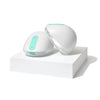
Willow Go excels among wearable pumps. Its flange tunnel offers 28mm of usable depth – the longest of any wearable pump tested for this guide.
Tunnel depth matters because nipples vary in length, and elastic nipples elongate further under suction. A short tunnel pushes the nipple tip against the inner wall. This creates friction and restricts milk flow. Willow Go's tunnel gives the nipple room to extend naturally, while its smooth, uninterrupted inner surface reduces abrasion risk from seamed or stepped flange interiors.
Suction tops out at -280mmHg per side, which is commonly defined as hospital-grade. But peak mmHg alone doesn't tell the full story. The Willow App lets you adjust strength and switch between stimulation and expression modes without reaching into your bra. Most moms need different settings during a session; this control without interrupting the pump separates effective milk removal from just running a motor. Splashguard containers reduce spill risk when you remove the cups.
Willow Go ships with 21mm and 24mm flanges, and inserts are available from 13mm to 27mm, which covers a wide span of nipple sizes within a single pump ecosystem. The pump sits lower on the chest than some competitors, thanks to a shorter tunnel height, giving it a more natural position under clothing.
Willow Go's larger profile is a direct result of its longer tunnel and in-bra motor — the same design decisions that drive its comfort and output advantage. If discretion and silence are the top priority, Elvie Pump is likely your best option. If comfort and milk output come first, Willow Go is the stronger choice.
Pros:
-
Longest tunnel length at 28mm, accommodating more nipple lengths and elastic nipple types than any competitor tested
-
Smooth single-surface interior with no seams or steps inside the flange, reducing friction during extended sessions
-
-280mmHg suction per side with app-controlled adjustments, so you can fine-tune without removing the pump
-
Comes with 21mm and 24mm flanges; inserts available from 13mm to 27mm separately or through the Breast Pump Sizing Kit
-
5 oz and 7 oz container options available, accommodating higher-output sessions without stopping to empty
-
HSA/FSA eligible and compatible with major insurance plans through an upgrade option
Cons:
-
Larger profile than Elvie Pump, which is the slimmest and quietest option in this guide
-
Higher price than budget wearables at $349.99, though still $200 less than Elvie Pump
Pricing: $349.99; HSA/FSA eligible. Insurance upgrade options are available through the preferred partners (learn more on the Willow insurance page).
2. Willow 360 Wearable Breast Pump: Best for Active Moms
Best for: Moms who pump while moving, traveling, bending over, or lying down, and need zero-spill confidence in any position.
Willow 360 is 100% leak-proof in any position. Where other pumps require you to stay mostly upright to avoid spills, Willow 360 uses a sealed collection system that works whether you're standing, leaning forward, or reclining.
It shares the same flange and insert ecosystem as Willow Go (ships with 21mm inserts and 24mm flanges), so sizing carries over if you switch between the two. Hospital-grade suction and app control are included, along with access to Willow's 360 Care support program.
Pros:
-
100% leak-proof in any position, a claim no other wearable pump in this guide makes
-
Hospital-grade suction with app control, matching the feature set of Willow Go
-
Same sizing ecosystem as Willow Go, so inserts and flanges are interchangeable
-
360 Care support program with a certified pump & lactation consultant included
Cons:
-
Highest price in the Willow lineup at $499.99, which puts it in the premium tier
-
Heavier than Willow Go, adding more weight per side inside the bra
Pricing: $499.99; HSA/FSA eligible.
3. Elvie Pump: Best Wearable for Discretion
Best for: Office environments and moms who prioritize silence and slim profile over other features.
Elvie Pump operates at approximately 32 dB, making it one of the quietest wearable pumps in this roundup. Forbes Vetted (Mar 2026) named it "Best Overall Wearable Breast Pump," citing its slim profile and low noise.
Breast shields (flanges) are available in 21mm, 24mm, and 28mm. For smaller nipple sizes, Elvie Nipple Cushions (15mm, 17mm, 19mm) fit inside the included 24mm shield. App-connected session tracking gives you detailed data on output and pumping patterns.
Pros:
-
Quietest pump tested at approximately 32 dB, making it nearly inaudible across a conference table
-
Broad fit range via 21mm, 24mm, and 28mm breast shields; Nipple Cushions (15mm, 17mm, 19mm) fit inside the included 24mm shield for smaller nipple sizes
-
Slim, low-profile design that is the least visible under clothing
Cons:
-
Highest price in this guide at $549.99, a $200 premium over Willow Go
-
Lower max suction than Willow Go, which may affect output for some users
Pricing: $549.99.
4. Elvie Stride — Best Insurance/Budget Pick
Best For: Moms who want hospital-strength pumping performance without paying premium prices, especially when insurance covers the Stride at little to no cost. The external motor makes this ideal for moms who primarily pump at home or don't need the full discretion of in-bra models.
The Elvie Stride delivers hospital-grade suction for $199.99, making it the most affordable premium wearable in this guide. Unlike fully in-bra pumps, the Stride uses an external motor that clips to your clothing.
What separates the Stride from budget wearables that struggle with adequate milk removal is its hospital-strength suction. The external motor design allows for more powerful suction while keeping costs down. This different engineering approach prioritizes performance over a fully wireless design.
Pros:
-
Hospital-grade suction at the lowest price point in this guide
-
Widely covered by insurance plans with minimal or no upgrade fees
-
Reliable everyday performance without the complexity of app connectivity or premium features
Cons:
-
External motor clips to clothing rather than sitting fully in-bra
-
Less tech-forward than the Willow Go or Elvie Pump — no app control or advanced session tracking
The Stride proves you don't need to sacrifice pumping quality for affordability. For moms whose insurance covers the upgrade cost, it delivers professional-grade milk removal at a fraction of premium pump prices.
5. Momcozy Wellness 1 (W1): Built-in Heat & Massage
Best for: Moms who want warm compress and massage built into the pump rather than as a separate step.
The W1 pairs suction with built-in heat and vibration massage. Suction reaches -295mmHg across 12 levels, with app control for all three functions.
The trade-offs: at 70mm deep it's the bulkiest pump in this guide, and it runs under 50 dB, much louder than Elvie Pump and Willow Go. The tunnel depth is 14mm, the shallowest here, so moms with longer or elastic nipples should check the fit before buying. The warm feature cannot be used with engorgement, clogged ducts, or mastitis.
Pros:
-
Built-in heat and massage synced to suction — not available in any other pump in this guide
-
-295mmHg suction across 12 levels with app control for warmth, massage, and suction
-
Up to 10 sessions per charge in standard mode; 6 sessions with heat and massage active
-
HSA/FSA eligible
Cons:
-
Shallowest tunnel depth at 14mm (moms with longer or elastic nipples should check fit before buying)
-
Louder than Elvie Pump at under 50 dB
-
Heat cannot be used with engorgement, clogged ducts, or mastitis
Pricing: $329.99; HSA/FSA eligible.
6. Medela Pump In Style: Established Wall Pump Brand
Best for: Moms who prefer a brand that has been around for years and many lactation consultants are familiar with.
The Pump In Style's tunnel length of 26.3mm is more competitive with Willow Go's 28mm and well ahead of many budget wearables, however it is not fully in-bra, and the app experience is less developed than Willow or Elvie. Insurance availability through DME providers is broad, and the Pump In Style Pro is often covered at no cost through most plans.
Pros:
-
Strong familiarity among IBCLCs and hospital lactation programs
-
Competitive tunnel length at 26.3mm, second only to Willow Go in this guide
-
Wide insurance availability through DME providers and hospital partnerships
Cons:
-
Traditional models are not fully in-bra, requiring external motor setups for hands-free use
-
Less app-forward than Willow Go or Elvie Pump, with more basic digital features
-
Less design innovation focused around comfort and milk output.
Pricing: Varies by model; widely covered by insurance.
7. Eufy Wearable Breast Pump S1 Pro: Heated In-Bra Option
Best for: Buyers who want a fully in-bra design with heated pumping technology built in. (Note: Heat cannot be used with engorgement, clogged ducts, or mastitis).
The Eufy S1 Pro is a fully in-bra wearable with a heated pumping feature and average suction range for this price tier.
Tunnel depth is approximately 17.5mm, which is ahead of Momcozy but well behind Willow Go's 28mm. Eufy is a newer to the breast pump category, which means less clinical validation and a smaller flange accessory ecosystem.
Pros:
-
Fully in-bra design with heated pumping technology
-
Adequate suction range for the price
Cons:
-
Shorter usable tunnel depth (approximately 17.5mm) than Willow Go, Medela, or Elvie, which can result in a painful pumping experience
-
Single-container size only, with no larger-capacity option for high-output sessions
-
Limited flange ecosystem and less clinical validation as a newer category entrant
Pricing: $349.99.
Summary Comparison Table
|
Pump |
Price |
Motor Type |
Tunnel Length |
Best For |
Insurance |
|
Willow Go |
$349.99 |
In-bra |
28mm |
Comfort + output |
Yes (upgrade) |
|
Willow 360 |
$499.99 |
In-bra |
28mm |
Leakproof / active |
Yes (upgrade) |
|
Elvie Pump |
$549.99 |
In-bra |
— |
Discretion |
Yes (upgrade) |
|
Elvie Stride |
$199.99 |
External |
19mm |
Budget / insurance |
Often no-cost |
|
Momcozy W1 |
$329.99 |
In-bra |
14mm |
Warm-massage |
HSA/FSA |
|
Medela Pump In Style |
Varies |
External |
26.3mm |
Established wall pump brand |
Yes (often no-cost) |
|
Eufy S1 Pro |
$349.99 |
In-bra |
17.5mm |
Heated in-bra |
Varies |
Why Flange Fit Determines Everything Else
Comfort and output are connected hormonally, not mechanically. Pain while pumping inhibits the oxytocin reflex, which triggers letdown. Without adequate let-down, milk stays in the ducts regardless of suction strength.
Tunnel depth and size reflect the same design decision — more room for the nipple means a larger pump profile. If you're unsure about your size, the Breast Pump Sizing Kit ($24.99) measures your nipple diameter accurately before you commit to a pump. You can also read a detailed walkthrough on how to measure flange size.
How We Chose the Best Wearable Breast Pumps
We evaluated each pump on flange tunnel length and the broader fit ecosystem instead of advertised flange diameter. Motor placement was assessed for its discretion in work and home settings instead of published decibel levels. Hospital-grade claims were checked for what they specifically mean per pump, since no federal standard governs the term.
Insurance compatibility and HSA/FSA eligibility were verified for each model. Flange size range was measured against the diversity of nipple anatomy in the general population. App functionality was evaluated for working-mom use cases, particularly the ability to adjust settings and track output hands-free.
And last, but certainly not least: comfort and output, which connect through physiology rather than just preference. Often specs that ignore fit ignore that connection.
FAQs
What is a wearable breast pump?
A wearable breast pump sits inside or attaches to the bra, with no wall outlet to tether you in place. The motor can be fully in-bra (as with Willow Go and Elvie Pump) or external, clipping to clothing (as with Elvie Stride). Willow Go is fully in-bra with app control and hospital-grade suction up to -280mmHg.
How do I choose the right wearable breast pump?
Start by measuring your nipple diameter and adding 1mm–3mm for your approximate flange size. Then check the usable tunnel depth, not just the diameter, for any pump you're considering. The Sizing Hub can walk you through the process step by step.
Is Willow Go better than Momcozy?
Willow Go and the Momcozy W1 solve different problems. Willow Go leads on flange tunnel depth (28mm), hospital-strength suction, and fit ecosystem. The Momcozy W1 adds warm compress and rhythmic massage synced to the pumping cycle — features that are not always suitable to your pumping experience and can be harmful if you’re experiencing mastitis.
Is Willow Go better than Elvie Pump?
Willow Go has a longer tunnel length, stronger maximum suction (-280mmHg), and a lower price ($349.99 vs $549.99). Elvie Pump is quiet and slimmer under clothing. Both offer sizing inserts and breast shields to support more nipple sizes. Both brands are Willow-owned. Your choice depends on whether you prioritize fit and output or discretion.
Will my insurance cover a Willow Go?
The ACA requires insurance coverage for breast pumps, though premium wearable models typically require an upgrade fee beyond the base coverage amount. Willow Go is HSA/FSA eligible and compatible with major insurance plans.
What does "hospital-grade" mean for a wearable pump?
It's not a regulated term. Each brand defines it differently, and no federal standard governs its use on personal-use pumps. For Willow Go, hospital-grade or hospital-strength refers specifically to suction strength of up to -280mmHg per side. Ask any brand what the claim means for their specific pump before making a purchase decision.
What flange size do I need for a wearable pump?
Measure your nipple diameter before pumping (not during or after, when tissue is swollen), then add 1mm to 3mm. Willow Go comes with 21mm and 24mm flanges, with inserts available from 13mm to 27mm. The Breast Pump Sizing Kit gives you an accurate measurement at home for $24.99.
What is the best breast pump for working moms?
Willow Go is fully in-bra and app controlled, which means you can adjust settings from your phone during a meeting. Elvie Pump is the quietest option at approximately 32 dB, making it nearly inaudible in an open office. Finally, Elvie Stride delivers hospital-strength suction at the most insurance-friendly price, keeping out-of-pocket costs low for moms already managing childcare expenses.
Tags Used